What do I need to know about GNI and holiday pay?
As we approach the peak of the annual leave period, here’s a reminder of how holiday pay is calculated so that both employees and employers don’t have any questions about the amounts transferred.
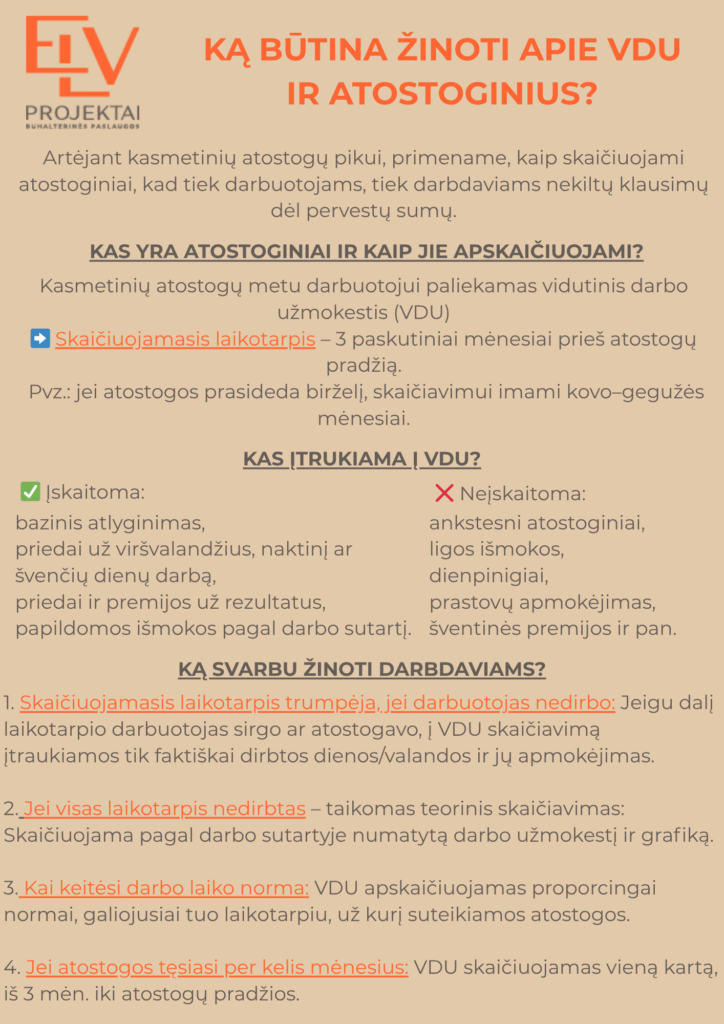
What is holiday pay and how is it calculated?
During annual leave, the average salary (AWW) is retained
➡️ Calculation period – the last 3 months before the start of the holiday.
For example: if the holiday starts in June, the calculation is based on March-May.
Who is being pushed into the VMU?
✅ Legible:
basic salary,
bonuses for overtime, night or public holiday work,
bonuses and performance incentives,
fringe benefits under the employment contract.
❌ Illegible:
previous holiday entitlements,
sickness benefits,
daily subsistence allowance,
payment for downtime,
celebratory prizes, etc.
What is important for employers to know?
1. Calculation period is shorter if the employee has been absent from work: if the employee has been sick or on holiday for part of the period, only the days/hours actually worked and their pay are included in the calculation of the GVA.
2. If the whole period is absent, the theoretical calculation applies: the calculation is based on the salary and timetable stipulated in the employment contract.
3. When the working time rate has changed: the GNI is calculated in proportion to the rate in force during the period for which the leave is granted.
4. If the leave extends over several months: the GNI is calculated once, from the 3 months before the start of the leave.